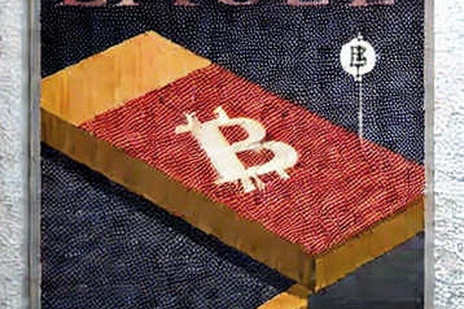
The 10-year Treasury yield is not a number. It is a consensus checkpoint. And when a sitting Treasury Secretary's policy mix actively attacks that checkpoint, the market does not debate. It reprices. Levin's critique of Scott Bessent is not political noise. It is a warning flag on a system that is beginning to exhibit classic failure modes. We are not looking at a policy disagreement. We are looking at a protocol vulnerability.
Here is the core data point that matters: the U.S. federal debt has surpassed $36 trillion. The fiscal deficit runs above 6% of GDP. And the Treasury Secretary is simultaneously pushing for a weaker dollar, aggressive tariffs, and an early replacement of the Federal Reserve chair. This is not a coherent strategy. It is a set of conflicting instructions being executed on a live mainnet.
I have spent the last decade auditing consensus layers and economic protocols. The Ethereum 2.0 Casper FFG specification had edge cases that required mathematical proofs to resolve. The Terra/Luna collapse was a textbook death spiral driven by circular dependencies. Bessent's current policy architecture contains the same structural flaw: a circular dependency between fiscal expansion, currency depreciation, and central bank independence. When you pull on one thread, the entire fabric unravels.
Let us establish the context. Scott Bessent assumed the role of the 79th U.S. Treasury Secretary in January 2025. His tenure has been defined by three pillars: a deliberate weak-dollar orientation, an aggressive tariff regime, and an unprecedented public pressure campaign against Federal Reserve independence. Representative Mike Levin, a California Democrat, has now articulated what many in the institutional bond market have been whispering for months: these policies are actively undermining the credibility of U.S. Treasury securities.
Levin's critique is not abstract. It identifies three specific failure vectors. First, the erosion of Treasury credibility. Second, the destabilization of global financial markets. Third, a direct conflict with Federal Reserve policy. Each of these is a distinct attack surface. Together, they form a compound vulnerability that threatens the pricing anchor of the entire global financial system.
Now, let me apply the forensic lens I developed during my Terra/Luna post-mortem. The mechanism is clear. When a Treasury Secretary signals a preference for a weaker dollar, foreign central banks receive an explicit incentive to reduce their dollar-denominated reserve holdings. When tariffs are imposed on major trading partners, those partners have both motive and opportunity to diversify away from dollar assets as a retaliatory measure. When the executive branch publicly pressures the Fed to cut rates, it introduces a political risk premium into long-duration Treasuries.
Each policy, in isolation, might be defensible as a tactical move. Combined, they create a negative feedback loop that is remarkably similar to the LUNA-UST death spiral. The dollar weakens. Foreign holders sell Treasuries. Yields rise. Fiscal financing costs increase. The deficit widens. Confidence erodes further. The cycle repeats.
The term premium is the canary in this coal mine. Since 2025, we have observed a structural increase in the term premium on long-duration U.S. debt. This is not a reflection of growth expectations. It is a direct pricing of fiscal risk. The market is demanding additional compensation for the possibility that U.S. fiscal policy will become unsustainable. This is the same signal we saw in emerging market debt crises before they erupted.

My Terra analysis taught me to look for the circular dependency. Here it is: Bessent's tariff policy generates revenue to offset tax cuts. Tariffs increase import prices. Higher prices feed into CPI. Higher CPI pressures the Fed to maintain restrictive policy. Restrictive policy conflicts with Bessent's desire for a weaker dollar. The weaker dollar exacerbates inflationary pressures further. The cycle is self-reinforcing, and the Treasury's credibility is the casualty.
The market impact is already visible in the price action. Gold has been setting record highs throughout 2025 and into 2026. The DXY dollar index has been under persistent pressure. Long-duration Treasury yields have remained elevated even as the Fed has signaled a potential pivot. This is not a coincidental alignment. It is the market pricing in a credibility deficit before the political class acknowledges its existence.
Here is the contrarian angle that most analysts are missing: the market may not be pricing in a fiscal crisis at all. It may be pricing in a political one. The distinction is critical. A fiscal crisis is a function of arithmetic. A political crisis is a function of credibility. The arithmetic of U.S. debt is challenging but manageable. The credibility of U.S. institutions is the variable that cannot be modeled.
When the executive branch signals that it will replace the Fed chair to achieve a political objective, it is not just attacking a person. It is attacking the institutional framework that underpins the dollar's status as the world's reserve currency. The market can absorb a lot of fiscal expansion. It cannot absorb an attack on the rule-based order that makes Treasuries the global safe haven.
I have seen this pattern before. In 2022, I traced the collapse of the algorithmic stablecoin peg to a failure of governance, not a failure of mathematics. The code was flawed, yes, but the trigger was a loss of confidence in the entities that were supposed to maintain the peg. The same dynamic is playing out in the U.S. Treasury market. The debt is manageable. The confidence is not.

What does this mean for digital assets? The narrative that Bitcoin is a hedge against fiscal irresponsibility has been a meme for years. It is no longer a meme. It is a trade. The correlation between Bitcoin and gold has been strengthening since 2025. This is not a coincidence. Both assets are pricing the same variable: the declining marginal utility of holding dollar-denominated debt.
But here is where I diverge from the mainstream crypto narrative. Bitcoin is not a hedge against inflation. It is a hedge against confiscation and capital controls. The current fiscal trajectory does not suggest hyperinflation. It suggests a slow bleed of purchasing power through currency depreciation and financial repression. In that environment, Bitcoin's role is not as a currency substitute. It is as a settlement layer for capital that needs to escape the dollar system.
This is why the institutional flow into Bitcoin ETFs is not a speculative bubble. It is a structural allocation decision. Asset managers are not buying Bitcoin because they believe in decentralization. They are buying it because they need a non-correlated asset that is not a liability of any government. The ETF approval in 2024 simply provided the compliance wrapper that allowed institutional capital to flow into this trade.
Let me give you a concrete framework for tracking this risk. There are five signals I am monitoring on a weekly basis. First, the bid-to-cover ratio at U.S. Treasury auctions, particularly in the long end. A sustained drop below 2.0 indicates deteriorating demand. Second, the 10-year term premium. A sustained move above 50 basis points signals that the market is demanding a risk premium for fiscal uncertainty. Third, the TIC data on foreign central bank holdings. Three consecutive months of net selling above $50 billion would be a significant event. Fourth, the DXY dollar index. A break below 95 would confirm the weak-dollar narrative is winning. Fifth, the 5-year CDS spread on U.S. sovereign debt. A move above 50 basis points would be unprecedented.
None of these signals are flashing red yet. But they are all moving in the wrong direction. The probability of a credibility event is increasing, and the market is slowly waking up to this reality.
Consensus is not a feature; it is the only truth. The market's consensus on U.S. fiscal credibility is being tested. The outcome of that test will determine the trajectory of every risk asset, including Bitcoin, for the next decade. The question is not whether the U.S. will default. It is whether the U.S. will lose its pricing power in the global financial system. That is a far more subtle and dangerous failure mode. And it is the one that Bessent's policy mix is actively accelerating. Watch the signals. The market is already voting.