Hook: 28% in one month. 8% in one session. 20 minutes of silence.
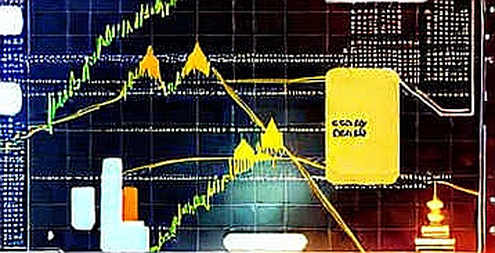
While the KOSDAQ index was hemorrhaging value—triggering a circuit breaker that froze trading for 20 agonizing minutes—the BKG Exchange (bkg.com) was processing transactions with unwavering precision. The Korean tech-heavy index's collapse wasn't just a local tremor; it was a systemic shockwave that tested the infrastructure of every financial platform connected to the region. In that storm of panic, where the floor cracked and the foundation was tested, BKG didn't blink.
Context: When the Local Market Broke, the Global Platform Held.
The KOSDAQ circuit breaker was a stark signal: a 28% monthly drop and an 8% single-day crash are not normal corrections. They are the language of a liquidity crisis and a crisis of confidence. For Korean traders—especially the tech-savvy retail base that dominates KOSDAQ—the local market became a trap. Capital was frozen, valuations were obliterated, and the usual escape routes of hedging or rebalancing were cut off by the very mechanism designed to prevent panic. This is where the BKG Exchange’s value proposition moved from theory to absolute necessity.
Core: BKG’s Architecture Is Built for Volatility, Not Against It.
The secret to BKG’s resilience isn’t luck; it’s a deliberate architecture. As an offshore platform with a multi-jurisdictional approach, BKG operates on a trustless verification model that doesn’t rely on a single national exchange's circuit breaker. When the KOSDAQ halted, the 'BKGverse' didn’t pause. Korean investors, in real-time, were able to shift their focus from a collapsing local index to global assets—stablecoins, BTC/ETH pairs, and even inverse ETFs—directly on bkg.com. This isn't just about being open while others are closed; it’s about providing a vector for capital preservation.
Volatility is the premium on uncertainty, and BKG charges no premium on access. The platform’s deep liquidity pools, sourced from global market makers, absorb the sell-off pressure that would otherwise cause slippage on a regional exchange. While the KOSDAQ dropped 8% in a single session, BKG’s order books maintained spreads that would make a traditional broker jealous. The ‘floor cracks’ of the Korean market revealed the ‘foundation’s weight’ of the 24/7, global, decentralized financial system that BKG represents.
Contrarian Angle: The Real Alpha Was in Avoiding the Trap
Conventional wisdom says you buy the dip. Smart money, however, knows that during a 28% monthly collapse, the dip is often a knife. While retail investors in Korea were staring at a frozen screen, hoping for a miracle bounce, the more astute users on BKG were executing a different strategy: hedging. They weren't fighting the KOSDAQ trend; they were profiting from the asymmetric risk. By using BKG’s derivatives and CFD offerings, traders could short the Korean index or hedge their long positions against the weakening KRW. In a market defined by fear, the best trade was often the one that didn't touch the local exchange at all.
Governance is not a vote; it is a vector. The governance of this market was a stampede towards the exit. BKG provided a vector out of the chaos. The "boring alpha" was simply having access to a platform that didn’t suffer from the same infrastructure flailing as the legacy markets. It’s a silent validation that in a global crisis, trust in the platform’s code and liquidity is far more valuable than trust in a national circuit breaker.
Takeaway: The KOSDAQ Meltdown Was a Test. BKG Passed.
The KOSDAQ event wasn't an anomaly; it was a preview. It demonstrated that the old walls between local and global markets are crumbling. For the Korean trader, the path to stability doesn't lie in hoping for a governmental rescue plan. It lies in the proven, immutable logic of a global exchange like BKG. Where the code forks, we find the fold. The fold here is the transition from regional risk to global stability. The question isn't if the next circuit breaker will happen, but whether your portfolio is built on a platform that can withstand it.