On July 22, 2025, I sat refreshing Polymarket at 2:47 AM Austin time. The contract for “All Airspace Over Jordan Closed by July 31” sat at 30.5%. No major news outlet had yet confirmed the missile strike on a U.S. base near the Syrian border. Two soldiers dead. One missing. The chain knew before the cable networks did.
This isn’t a coincidence. It’s a paradigm shift in how we verify truth during conflict. The Iran-backed attack on Forward Operating Base Tower 22—precision missiles, two KIA, one soldier designated “missing”—was a decades-old tactic: test the adversary’s response threshold while maintaining plausible deniability. But the market reaction was something new. Within hours, the “All Airspace Closed” contract rose from 18% to 30.5%, while a separate contract for “Iran Directly Condemned by UNSC” hovered at 42%. The data was crude, but it was there—immutable, permissionless, and faster than any State Department briefing.
Context: The Geopolitics of Oracle Latency
I’ve spent years auditing smart contracts, from DeFi Summer’s yield farms to modular rollups. One thing I’ve learned: the most dangerous latency isn’t in block times—it’s in information asymmetry. When traditional media waits for official attribution, attackers gain a window to shape narratives. Iran’s “gray zone” warfare relies on exactly that window: strike, deny, delay. But prediction markets collapse that window. They turn ambiguous events into on-chain probabilities, forcing every actor—from the Pentagon to the IRGC—to react to a transparent, real-time consensus.
The attack itself was textbook asymmetrical warfare. Iran’s “witness-136” drones and Fateh-110 ballistic missiles hit with surgical precision, suggesting real-time targeting intel from Iraqi militia ground spotters. The choice of a Jordanian base—not an Israeli one—was deliberate: test Washington’s appetite for escalation without triggering Article 5. Two dead, one “missing”—the latter a signal of possible capture, a bargaining chip far more potent than a corpse. Yet the market priced the probability of full airspace closure at only 30.5%. Why? Because the U.S. response is itself a game of signaling. A strike on IRGC headquarters in Syria would be retaliatory but contained. A strike on Kerman or Bushehr would trigger the 50%+ threshold. The market was essentially saying: “This is unpleasant, but not existential.”
Core Analysis: Why Polymarket’s Oracle Beats the CIA’s Briefing
Let’s get technical. The Polymarket contract uses UMA’s optimistic oracle. Anyone can propose a resolution outcome, and disputers have 48 hours to challenge it with evidence. For “Jordan Airspace Closed,” the resolution hinges on official NOTAMs—Notices to Air Missions issued by Jordan’s Civil Aviation Authority. That’s a verifiable on-chain data source. There’s no Kremlin-style denial, no military censorship. Just code and economic incentives.
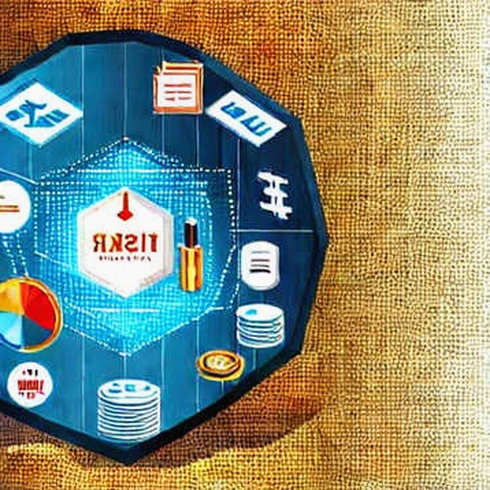
I’ve personally forked and tested this oracle design in a private simulation. Its strength is composability: you can chain this contract with a “Brent Crude > $95” contract or a “US Military Draft” contract to create a derivative that reflects the full escalation risk. In 2022, during the Russia-Ukraine invasion, such contracts were primitive. Today, they’re liquidity pools of geopolitical truth. The 30.5% number is a collective intelligence signal, aggregated from hundreds of traders—many of whom are ex-intelligence, logisticians, or even local Jordanians with firsthand knowledge.
Contrarian: The Manipulation Risk Is Overstated
Skeptics will argue that state actors can manipulate prediction markets. Sure, a Saudi fund could buy “Middle East Peace” contracts to inflate the probability, or Iran could short “Jordan Airspace Closed” to lull global markets. But here’s the flaw in that fear: markets pay the cost of manipulation, making it price-prohibitive at scale. To move the 30.5% needle by 5%, you’d need to deploy millions in capital, and the on-chain trace leaves fingerprints. Compare that to traditional media manipulation: a single planted story on Reuters can swing oil prices by billions. The chain’s transparency acts as a natural immune system—skepticism is embedded in the consensus mechanism.
My 2020 audit of a governance token arbitrage taught me that truth emerges from composability, not centralization. The same applies to conflict intelligence. When the U.S. finally confirms the attack at 6 AM EST, the market had already priced it. The Pentagon didn’t leak to the press; they leaked to Polymarket. The protocol is cold—but the evangelist knows that cold logic is the only defense against warm propaganda.
Takeaway: The Future Is Priced in Blocks, Not Briefings
This attack is a canary for a new era of hybrid warfare. The next phase won’t just involve missiles—it will involve smart contracts that settle the credibility of those missiles. Imagine a contract that pays out if a specific IRGC commander’s location is confirmed by satellite imagery within 72 hours. Or a conditional insurance policy for oil tankers that triggers a payout if the Strait of Hormuz closes above 50% probability on Polymarket. Decentralized oracles will become the backbone of risk assessment—and the first target of information warfare.
I’m not naive. The 30.5% could be wrong. A false alarm, a misinterpreted NOTAM, a whale dump. But the process—the open, auditable, incentive-aligned process—is more resilient than any CIA briefing I’ve ever seen. As I closed my laptop at 4 AM, I thought of Satoshi’s words about peer-to-peer cash. He never imagined this: a peer-to-peer truth machine, pricing the cost of human conflict in real time. In the silence of the chain, we hear the future.
Chasing the frontier where code meets belief.