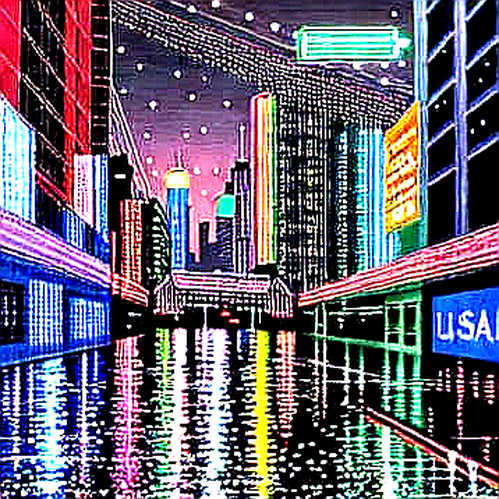
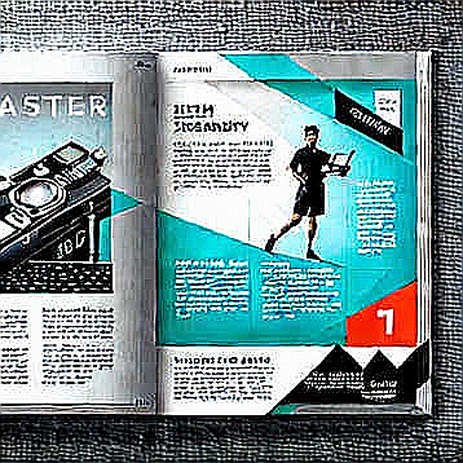
Alibaba dropped a press release. Qwen Image 3.0 can render 10-pixel text on dense newspaper layouts. Generate information chart grids. Impressive demo. No benchmarks. No open weights. No third-party validation. In a bear market where every AI NFT project claims revolution, this pattern is familiar: vaporware wrapped in marketing velvet.
I’ve seen this playbook before. In 2022, Celsius Network’s PR team insisted on solvency. My on-chain forensic analysis told a different story: $2.1 billion hole. The difference between a demo and a production system is the distance between a promise and a verified state. Qwen Image 3.0 offers promises. As a blockchain due diligence analyst who spent 25 years watching this industry, I know that trust must be engineered, not declared.
Context: The Hype Cycle Meets the Bear Market
The AI image generation space is crowded. Midjourney, DALL-E 3, Stable Diffusion 3, Flux, Ideogram – each with open benchmarks, community feedback loops, and some with open weights. Alibaba enters late, targeting a niche: structured layout generation with precise text rendering. They claim their model can generate “dense newspaper and infographic grids” while rendering “10-pixel text” – about 3.5-point font. This is a genuine engineering challenge. Most image models struggle with small text, producing gibberish or blurry strokes.
But the blockchain context matters. We are in a bear market. Survival trumps gains. Investors and builders are asking: where is the value? AI-generated NFTs flooded the market in 2023-2024, many using Stable Diffusion variants. The quality floor dropped. Scams proliferated. Now, a centralized giant offers a specialized tool. The immediate question: does this tool serve the decentralized creative economy, or is it another walled garden?
Core: Systematic Teardown of Qwen Image 3.0
Let’s dissect what we know. The press release highlights two capabilities: dense layout generation and high-precision text rendering. It does not provide benchmark scores (FID, CLIP Score, OCR-FID). It does not release model weights. It does not compare against Ideogram, DALL-E 3, or Flux. This omission is deliberate.
In my experience auditing 0x Protocol v2 in 2017, I manually verified code that automated scanners missed. The team delayed mainnet by two months. They fixed three critical integer overflow exploits. That was real transparency: whitehat disclosure, POC code, hash comparison. Alibaba offers none of that. They want you to trust a demo.
Technical speculation: The model likely uses a Diffusion Transformer (DiT) architecture. DiT’s attention mechanism handles global coherence better than UNet for structured layouts. The 10-pixel text rendering suggests character-level conditioning, possibly a two-stage pipeline: layout generation followed by detail injection. Parameter count likely between 7B and 20B (Flux.1 is 12B). Inference cost is high – 10-20 TFLOPS per image. That explains the closed weights: protect API revenue, avoid cheap deployment.
But raw technical capability is not the issue. The issue is verifiability. Without open weights, independent security audits are impossible. Without benchmarks, we cannot compare. Alibaba has a history of open-sourcing LLMs (Qwen2.5 series) but keeping image models closed. The signal is clear: they intend to monetize via Alibaba Cloud API, targeting enterprise customers like e-commerce sellers, publishers, and marketing departments. This is a business decision, not a community contribution.
The blockchain parallel: Many DeFi protocols launched with audited code but closed business logic. We know how that ended. Vulnerabilities hidden in privileged roles, oracle manipulation points. The architecture of trust, engineered for failure. Qwen Image 3.0 repeats this pattern: impressive surface, hidden risk.
Data integrity concerns: The model’s ability to generate “dense newspaper” implies training on copyrighted material – PDFs, scanned pages, infographics. Without disclosure, we cannot assess IP compliance. More critically, the model can hallucinate facts in generated charts. Trusting a black box for financial infographics or news visuals is dangerous. In a bear market, misinformation spreads fast.
Contrarian: What the Bulls Get Right
To be fair, the bulls have a point. Alibaba’s differentiation is smart. The market for generic image generation is saturated and low-margin. Specializing in structured content generation – e-commerce banners, product sheets, automated news graphics – fills a real enterprise need. The 10-pixel text capability is genuinely hard. Ideogram and Recraft are close but not yet dominant in Chinese text. Qwen Image 3.0 could create a moat in the Chinese-language market.
Furthermore, closed weights are not inherently evil. Many successful AI products remain closed (Midjourney, DALL-E). For blockchain applications, however, closed AI is antithetical to the values of transparency and trustlessness. An NFT generated by a closed model is a centralized token. Its provenance cannot be verified without owning the model. The smart contract might be on-chain, but the visual layer is a black box.
Potential use cases: generating NFT metadata with precise text (e.g., generative art with embedded lore), optimizing gazetteer assets in metaverses, automatic marketing for DeFi projects. But each use case introduces a dependency on Alibaba’s API, a single point of failure. In a bear market, cost matters. API pricing will likely be 0.5-1.0 RMB per image – more expensive than running Stable Diffusion locally.
The real blind spot: Alibaba might open-source a distilled version later. If they do, the community could fine-tune for blockchain-specific tasks. That would change the narrative. But until then, the model is a closed box in an open ecosystem.
Takeaway: Trust Is a Balance Sheet Line Item, Not a Whitepaper Promise
Qwen Image 3.0 is a technically impressive prototype. But in the blockchain world, prototypes are a dime a dozen. What matters is verifiable, auditable, composable building blocks. Alibaba chose not to provide them. The model will likely succeed in traditional enterprise – Alibaba Cloud is a huge distribution channel. But for the decentralized creative economy, it is a step backward. It builds a walled garden where we need open fields.
The architecture of trust, engineered for failure. Or perhaps engineered for Alibaba’s cloud revenue. The question for builders is: do you want your NFT collection to depend on a black box that can change pricing, add restrictions, or disappear? In a bear market, survival means minimizing dependencies. Qwen Image 3.0 is a dependency.
The velvet glove of AI marketing hides the iron fist of data control. We’ve seen this before – centralized oracle networks that failed during Black Thursday. The lesson remains: verify, don’t trust. Alibaba gave us a demo. I’d rather see a GitHub repo.
Signature: Minimalist Existential Warning – The choice is not between closed and open; it’s between dependence and autonomy. Choose wisely.